
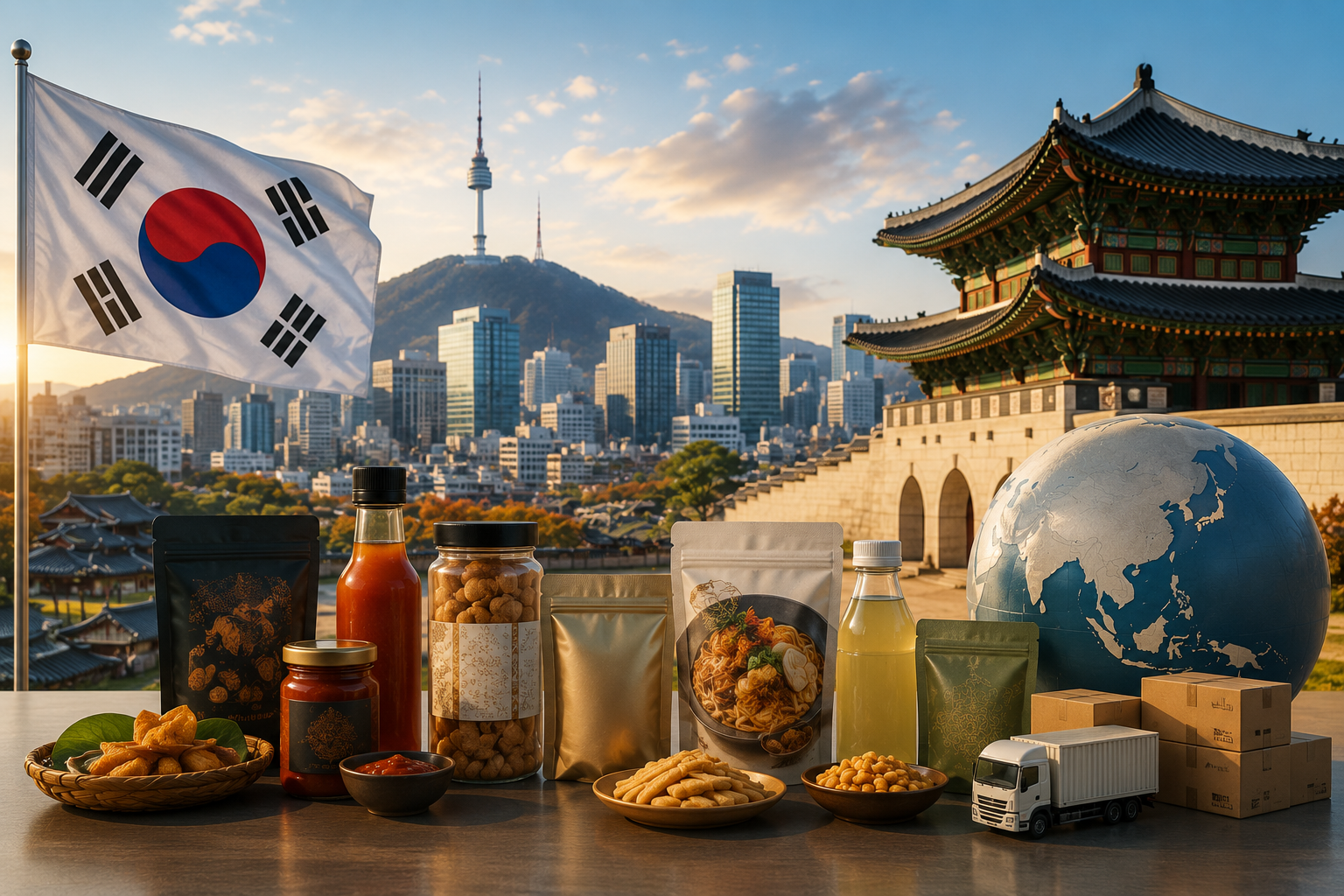
South Korea is one of the most attractive markets in Asia for international businesses. With strong consumer buying power, modern retail channels, and growing demand for imported products, the country offers many opportunities for companies that are ready to expand beyond their local market.
For Malaysian businesses, South Korea can be a promising destination, especially for food and beverage products, halal products, snacks, ready-to-eat meals, sauces, beverages, and lifestyle products. Malaysian products are often known for their unique flavours, multicultural identity, and halal value, which can help them stand out in the Korean market.
However, entering South Korea requires proper preparation. A good product alone is not enough. Businesses must understand Korean consumer preferences, import regulations, product documentation, packaging requirements, and pricing expectations.
Korean buyers usually look for products that are well-presented, consistent in quality, and easy to understand. Packaging plays an important role because consumers often make quick decisions based on design, product information, and convenience. Clear ingredient lists, suitable serving sizes, Korean-language labelling, and attractive branding can make a product more suitable for the market.
There is also growing interest in healthier product categories such as low sugar, organic, vegan, natural, and preservative-free products. Halal certification can be an added value, especially with the growth of Muslim-friendly tourism and awareness of halal products in South Korea.
Despite the opportunities, many small and medium businesses may face challenges such as incomplete documents, unsuitable packaging, complex ingredient lists, non-competitive pricing, and limited market exposure. These issues can slow down the market entry process if they are not handled properly.
To succeed in South Korea, businesses need to balance authenticity with adaptation. Malaysian products should maintain their original taste, identity, and quality, while adjusting their packaging, branding, language, and presentation to match Korean market expectations.
South Korea is not only a destination for export, but also a gateway for businesses to build international presence. With the right preparation, clear strategy, and strong market understanding, Malaysian products have the potential to grow and compete in this dynamic market.




Hi, this is a comment.
To get started with moderating, editing, and deleting comments, please visit the Comments screen in the dashboard.
Commenter avatars come from Gravatar.